Mending Broken Relationships
Learn how mending broken relationships and restoring trust is the first step toward reconciliation. Provide leadership in your relationships. Give great satisfaction by repairing abandoned relationships.
The stately horse farms comprise a key feature of the central Kentucky landscape. They are the heart and soul of the Bluegrass. I’ve noticed that when a fence is broken on a farm, it won’t stay down for long. Soon a crew will be out mending the fence and making it safe again.
This comes as no surprise. Those Thoroughbreds are extremely valuable.

Broken Fences Need Mending:
Restoring Trust
Mending broken relationships starts by restoring trust. This takes time, especially if the other person is angry or there is a long history of problems.
But what happens when a trusting friendship breaks down, and the two parties refuse to talk to each other? A silly argument or sudden disagreement ends in hurt and despair. A misunderstanding can come between the best friends. Each is in disbelief that his/her good friend has let him/her down.
Trust has been fractured. The one who has been hurt is afraid to trust again. No wonder it's so hard to restore trust in a relationship.
The story is a familiar one. It seems we do not always regard our relationships as highly as the Thoroughbred breeder regards his valuable horses.
Act Quickly
The most successful relationship partners jump to heal the argument or fight. They don't wait around to repair the problem.
Do you take steps to mend the fence immediately? Or do you leave the boards down and the gaping hole in place?
Time goes by and the old friends remain silent. Neither will contact the other. The awkward and oft‑times vengeful silence grows into a potential stalemate, which grows into a potential grave for the relationship.
Sometimes it’s pride that keeps them apart. Ditch your silly pride. Pride does not become a relationship.
Or each party feels that the other is wrong and expects him or her to apologize. A person may feel betrayed, refusing to believe that the good friend behaved so badly or out‑of‑character. Feelings may be so strong that he or she may never attempt to re‑establish communication, or seek reconciliation.
You Hold the Power to Fix Relationship Problems in Your Hands
No matter what has gone wrong, you can decide how you want to respond to any situation, and you can always take the high road, say you're sorry and be the one who acts to make things right.
Do it quickly and you'll rank among the world's most skilled relationship partners!
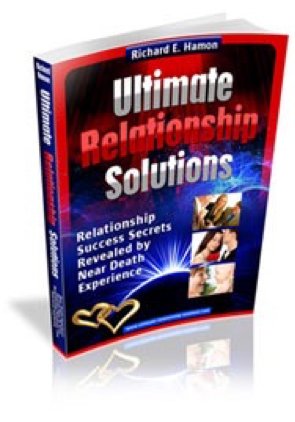
Check into our eBook, The Ultimate Relationship Solution, and get more Help Fixing a Relationship Problem
Restore Trust In A Relationship:
See the Other Point of View
Unfortunately, each person in a disagreement or feud only knows his or her own perspective. The other person’s point of view remains a mystery, leaving his/her conduct a bit confusing to the other. Yet, all behavior is meaningful. It has its own logic and its own rationale.
For every person in a relationship, family or organization, there is a different perspective.
When we don’t know the other person’s perspective, unique take or spin on an event, we are at a distinct disadvantage in interpreting their behavior. The only way to accurately comprehend our old friend’s perception of the situation is to listen without judgment or criticism. Then we can understand their perspective and allow the healing to begin...by accepting their point of view, even if we don't agree with it.
Validate their point of view by saying you get it.
Often we are so emotional we cannot think logically about the incident. It helps, in the meantime, to realize that the other person probably has a rationale that is different from ours, a rationale which makes sense to him/her. We should temporarily shelve our own point of view so that we can give full attention to the other point of view.
Once you have some distance from your emotions, it seems so much easier to admit your side of being wrong. Apologize and move on. Rebuild the lost trust and start mending broken relationships to get them going again.
Mending Broken Relationships:
Let the Healing Begin
Whatever you do, bury the old fight. Put the battle ax down. It doesn’t matter who was right or wrong, or what the disagreement was about. What matters is that you can save the relationship if someone will step forward and take action.
Also, remember not to hold a grudge. A grudge just keeps the battle raging, and keeps your relationship bogged down. You can't move on.
Resolve your conflict quickly and start having fun again FAST. You can save your relationship by acting quickly to repair the rift.
If you don't act, the stress of the unresolved conflict can take its toll, and take both parties down with it. All the more reason for you to initiate contact and do what it takes to put the relationship back on the up and up. Communicate.
Agree to disagree. Compromise. But, don't fight.
The mending of the broken relationship begins the moment one person steps up and does the loving thing, re‑establishes contact, and sends the clear message that he/she cares more about the relationship than proving their side of the dispute.
After all, would you rather be right or happy?

Join our Newsletter and Get
Two Free Gifts:
1. Assess Your Relationship Quiz
+
2. Rate Your Happiness Questionnaire


Recent Articles

-
Your Destiny
Aug 05, 20 12:10 PM
 Your destiny? Do you have one? How do you know what it is? Let's take a look at this ancient idea.
 -
Amazing NDEs
Jun 02, 20 10:35 PM
 Amazing NDEs are chilling portrayals of what happens after we die, and offer incredible wisdom as to how we can live.
 -
The Art of Relationships
Apr 25, 20 07:02 PM
 Learn the art of relationships and become a master of happiness, prosperity and well-being.