Why Relationships Fail
Why relationships fail is a good question. I think it usually comes down to having or not having the required skills. Good relationship skills separate the winning couples from the losers.
We know that success in all walks of life depends at least in part upon good relationships. Actually, good relationships stroke our well being and give us confidence to face life's challenges. They are the truest kind of wealth. There is hardly anything worthwhile that one can accomplish without the help of others. So, it pays to learn relationship skills.
Why Relationships Fail:
Starting Out on the Wrong Foot
Ever wonder why some relationships fail? Often the partners lack the skill to handle the trouble that comes to any relationship, or they get into a whirlwind promenade that begins with romance and never seems to get around to establishing the fundamentals of friendship and respect. They tend to be short‑lived and inconsequential.
People often want that truly exceptional love life now, instead of giving their love life time to grow. And, some folks hop from relationship to relationship because they're gone as soon as the infatuation stage wears off and they have to begin working at their relationship.
So, assuming you and your partner have an established and trusting relationship, and you are interested in building a very special future together, you can build a wonderful sexual liaison whose greatest joy is in the building!
A great way to continue bonding.
It can take many, many years to become a truly good partner, and years to know your partner so well you can anticipate his/her every move (or mood). The learning and fine-tuning process can be a riot of pleasure and joy.

Why Relationships Fail:
The Inability to Manage Conflict
Another reason why relationships fail . . . One of my clients told me that no one had ever taught him how to take care of his relationships and he didn't know how. He explained that he had limped through life trying to deal with his relationship blunders, and had no idea how to rectify problems that came up. My advice was to build relationship skills, and to learn fast.
Why keep losing people and squandering valuable relationships?
What my client was saying in part was that he had not been trained in effective ways of resolving conflict. Many of us grew up in families where conflict was handled poorly. Conflict may have been the norm, but we spent our time trying to dance around it. We knew that conflict meant trouble, and almost always led to more conflict, so we avoided it altogether.
My client had developed the habit of discarding a relationship once it developed problems, which left him with a lot of emotional baggage. That's what he wanted to stop, he said. He could not continue to drown in failure.
Now, my client has worked out new methods for handling conflict, based on what he wanted to do that his parents did not, and has developed a maintenance schedule for his relationships. He is beginning to appreciate the importance of all relationships. He has learned that you can save your problematic relationship, no matter how troubled it may be, if you try and learn new skills. Thus, he is making significant strides in the right direction.
Why Relationships Fail:
Procrastinating Your Way to Failure
Still wondering why relationships fail? One of the biggest reasons for the decline of a relationship or marriage is neglect. Or not tending to your relationship garden. Your relationship is a living, breathing thing, a garden full of growing things. Your garden needs to be tended. The plants watered and nurtured.
It's easy to take a relationship for granted and to stop taking care of it. I see couples put their relationships on the back burner of the stove all the time. Then, years later, when they want to fix it, they can't.
An important relationship skill is to learn to nurture your relationship during times of distraction and distress.
- Spend time with your partner, even if you have to make time
- Deal with the threats to your relationship and its problems daily
- Discuss and resolve conflict now . . . avoid putting it off
- Communicate from the heart. It may take courage to do the things you’re afraid of, to say what’s in your heart, but it beats not doing anything or not saying anything
- Fix the problems that invariably pop up in a relationship QUICKLY -- a huge relationship skill (quick repair attempts). Say you're sorry and get over the fight right away
- Avoid stonewalling, being critical and finding fault. Never be spiteful or contemptuous with your partner (big mistakes that take relationships down)
- If you don't have a lot of time for your relationship right now, do little things to keep in touch with your partner and to let them know you care
Respond to Your partner Respectfully in Times of Stress
There are times when resentment or another unacknowledged issue pierces the relationship, which falls into a realm of quiet distress where little, if any, communication takes place. It is as if we are banished to Siberia for doing something wrong, or we have sent someone into the frozen reaches of a stark, desperate place for something they have done.
Remember . . . words can HURT. And some can never be taken back. Words can even kill a relationship.
Try this Experiment . . .
Crinkle up a piece of paper into a tight, little ball in your hand. Then try to straighten the paper out. Do the wrinkles go away?
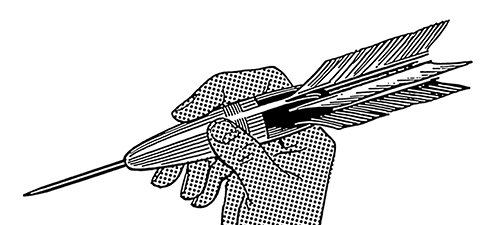 What good comes from shooting your partner with the poison darts of angry, hurtful words they may never forget?
What good comes from shooting your partner with the poison darts of angry, castigating words?
Or from making a cold, belittling emotional response? It is no way to save your relationship, but maybe you wanted to teach the other person a lesson. Or maybe you’re just too angry to say anything. Regardless, these emotional low periods in a relationship can be very discouraging and harmful.
Why not take care of the problems while they are small, nipping them in the bud, rather than allowing the anger and tension to build into a nasty crisis?
In Sum
Think about why relationships fail, and consider why your relationship isn't working. Relationships fail for many reasons. Deal with the specific issues facing your relationship, and the pressures facing you now, rather than later, and keep your relationship on the front burner of the stove. Always strive to learn new relationship skills, such as acting fast to fix a problem, and never give up.
If you're worried about your relationship and want help devising a simple plan of improvement, contact me. I'll be glad to help.

Discover How Our Unique e-Book, Relationship Gold,
Can Help You Save You Relationship
Click Here . . .
Go To Advice on Relationships from Why Relationships Fail
Go to Designing Great Relationships that stand the test of time here
Read about Marriage and Happiness
Get Regular Tips and Change Ideas
Free Stuff and Great Deals . . .
Join our Newsletter and get clinical tips sent to your inbox from experienced Master Therapist, Richard Hamon . . .
Join our Newsletter and Get
Two Free Gifts:
1. Assess Your Relationship Quiz
+
2. Rate Your Happiness Questionnaire


Recent Articles


-
Meditation Methods
Apr 30, 25 02:50 PM
 Meditation methods. All the information you need to understand the basic differences between the major meditation approaches.
 -
Tips for Happy Relationships: Find Your Relationship Gold
Apr 06, 25 06:33 PM
 relationships can be scary and demanding, but using these tips for happy relationships can help you find relationship gold.
 -
Positive Thinking Skills
Dec 09, 24 03:31 PM
 Positive thinking skills fuel happiness and success.